
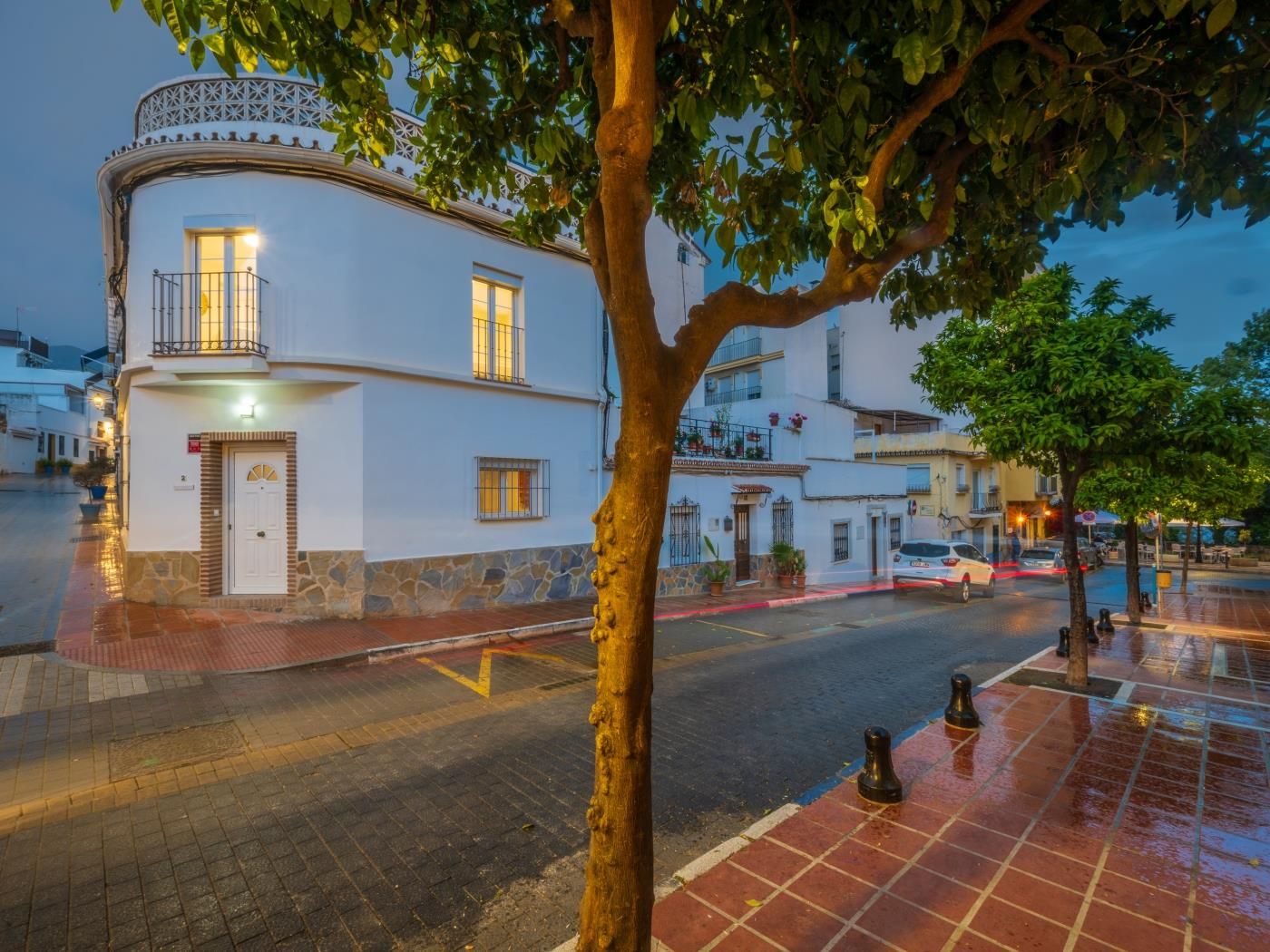
If you want to stay in Marbella Old Town, look for a holiday rental inside the Casco Antiguo and plan to explore on foot. The medieval castle walls, Plaza de los Naranjos, cafés and churches are woven into the neighbourhood; the beach is an easy walk, while a car belongs at the edge of the historic centre. This guide explains what the location feels like and the practical detail that matters most on arrival: restricted streets and parking.
The Old Town is a working neighbourhood as well as a visitor destination. Its appeal is the freedom to go out for coffee, come home for a break, then walk to dinner without organising transport. You trade a driveway at the door for narrow lanes, lived-in squares and a much simpler daily routine. If you are comparing this area with the marina, our Old Town versus Puerto Banús guide explains the different rhythms.
Why choose a holiday rental in Marbella’s Casco Antiguo?
The setting carries several centuries at once. The municipal history of Marbella describes a fortified Islamic town with a castle and three gates, followed by changes after the Christian takeover in 1485. In the 16th century, part of the former medina was opened up to create what became Plaza de los Naranjos. Today you can walk between the Moorish wall, later churches and civic buildings within a compact street pattern rather than driving from sight to sight.
Start at the castle walls, then continue to the Iglesia de Nuestra Señora de la Encarnación and its church square. Take the quieter Calle Carmen for white façades and surviving traces of the wall, then reach Plaza de los Naranjos for the town hall, the Casa del Corregidor and a pause under the trees. The historic Hospital Bazán now houses the contemporary print museum, another useful stop if the weather turns. Our Marbella area guide has more ideas for food, beaches and activities; this is a neighbourhood walk, not a checklist to race through.
For a family or group, the difference is felt in the small decisions. Someone can return with a tired child while the others finish a stroll; a café break need not turn into a parking calculation. The town beaches are roughly 10 to 15 minutes on foot from the historic centre, so a beach morning and an Old Town evening can fit into the same day. Expect uneven paving and short, narrow passages: comfortable shoes help, and a compact pushchair is easier than a large one.
Can you drive into Marbella Old Town?
Much of the historic core is pedestrian and some streets have restricted vehicle access. A map app may suggest a route through a lane that is unsuitable or signed for authorised traffic only. Being a guest at an Old Town rental does not itself grant permission to drive into a restricted street. Marbella’s traffic authorisation page treats access to pedestrian or restricted areas as a permission matter. Follow the signs on the ground and ask your host for the nearest legal drop-off point before arrival.
If you come by taxi or transfer, give the driver the actual street and agree on an accessible meeting point. If you hire a car, navigate first to a car park rather than to the front door. Allow for a short walk with luggage over paving that may be uneven; travelling light makes the last stretch easier. Temporary closures can also change access during processions and other events, so a previously workable route is not a guarantee on the day.
Tip: Save your host’s walking directions and car-park choice before leaving the airport. For the final approach, trust the local access signs over a sat-nav shortcut through the old lanes.
How do blue and green parking work near the Old Town?
Marbella has zona azul (blue) and zona verde (green) paid street spaces around the centre. The municipal tourism parking guidance, checked on 27 September 2026, gives these rules for visitors:
- Blue: any driver may park for up to 2 hours. The listed examples are €0.72 for one hour and €1.50 for two hours.
- Green: visitors may also pay to park, for up to 5 hours; the listed five-hour price is €4.60. A resident permit has different privileges, so a holiday booking is not a resident permit.
- Charging hours: Monday to Friday 09:00–14:00 and 16:30–20:30; Saturday 09:00–14:00. The municipal page says Sundays and public holidays are free in these regulated spaces.
- Payment: use coins at the machine or EasyPark. The municipality says the machine does not take a debit or credit card directly. Confirm the zone, number plate, end time and current tariff on the street sign or app.
Free charging periods do not override a no-parking sign, loading bay, private entrance or temporary restriction. Painted colours may look inviting, but it is the sign for that particular bay that controls your stay. The municipality published a new parking ordinance in August 2026 whose full application depends on a later implementation notice; check the ordinance page and the live signs for any changes after this guide’s update.
For a whole holiday, street spaces are a poor substitute for a long-stay plan. The city’s parking directory lists indoor options such as Mercado Municipal at Avenida del Mercado/Salvador Rueda and Plaza de la Victoria at Calle Huerta Chica; both are listed as open 24 hours. They charge separately from the blue and green street scheme, so compare their current daily rates, height limits and availability. The directory also lists Arroyo de la Represa on Calle Juan Alameda as free outdoor parking, subject to finding a space. None of these is parking at the rental’s door.
What should you see on your first day?
Keep the first walk simple: follow the visible wall, turn toward Plaza de la Iglesia and the Encarnación church, then drift to Plaza de los Naranjos. Continue down through the Alameda toward Avenida del Mar and the seafront if everyone still has energy. For a deeper look at the fortress, read our guide to Marbella Castle and its walls. Do not count on entering an intact castle interior; the interest is in the surviving fabric threaded through the streets.
Casa del Castillo is a four-bedroom townhouse facing Marbella Castle’s walls inside the Old Town, with a rooftop solarium overlooking the historic setting. It suits groups who want to step straight into the neighbourhood and return on foot between outings. See the house and its setting before deciding whether this kind of stay fits your plans.
The practical choice is straightforward: come for walkable Marbella, agree on your arrival point, and sort the car once. Then let the narrow streets do what they do well: turn an ordinary coffee or evening stroll into part of the holiday.
Planning dates? Ask us about staying in the Casco Antiguo.
Frequently asked questions
Is Marbella Old Town a good place to stay without a car?
Yes. The Casco Antiguo is largely pedestrian, with squares, restaurants and the castle walls close together; the central beaches are an easy walk. A car is more useful for excursions beyond Marbella.
Can guests drive to a holiday rental inside the Casco Antiguo?
Do not assume so. Many historic streets are pedestrian or have restricted access. Arrange a drop-off at a legal, accessible edge of the Old Town and follow local signs or any host instructions for permitted access.
Can visitors use green parking spaces in Marbella?
The municipal tourism guidance currently allows visitors to use marked green spaces for up to five hours, with payment. Blue spaces allow up to two hours. Check the signs and machine or EasyPark before leaving a car.
Where should I park for an overnight Old Town stay?
A paid car park at the edge of the historic centre is usually easier than moving a car between short-stay blue or green spaces. Check the operator’s current tariffs and vehicle height before booking.
More from the blog
How to Get from Málaga Airport to Marbella Old Town
How to get from Málaga Airport to Marbella Old Town: the AP-7 vs A-7 drive, the direct airport bus, taxis and private transfers, plus where to park.
Read article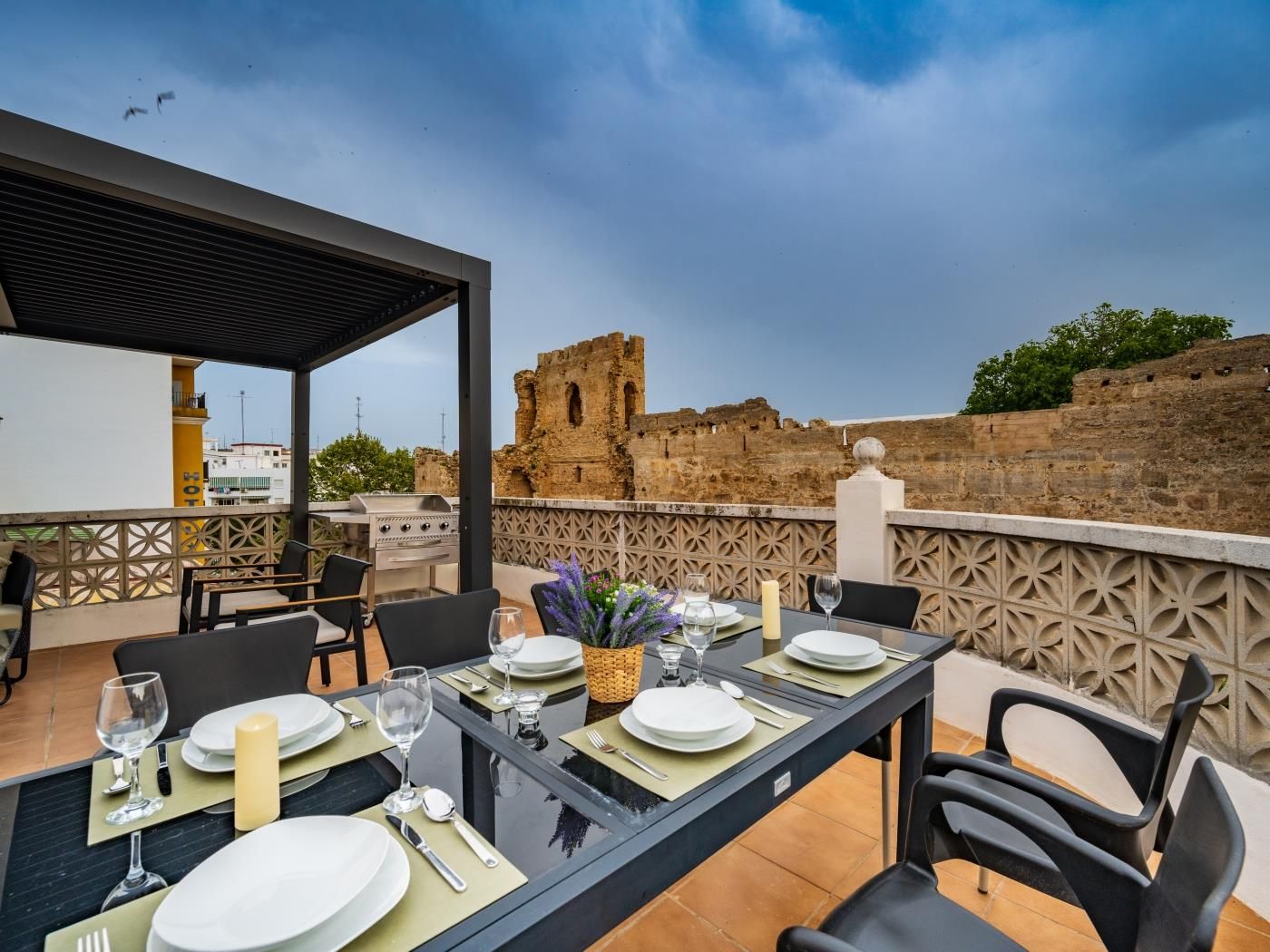
Marbella Castle: History, What to See and Staying by the Walls
Explore Castillo de Marbella and its Moorish walls: the history, surviving towers, nearby Old Town sights and what staying beside the castle is like.
Read article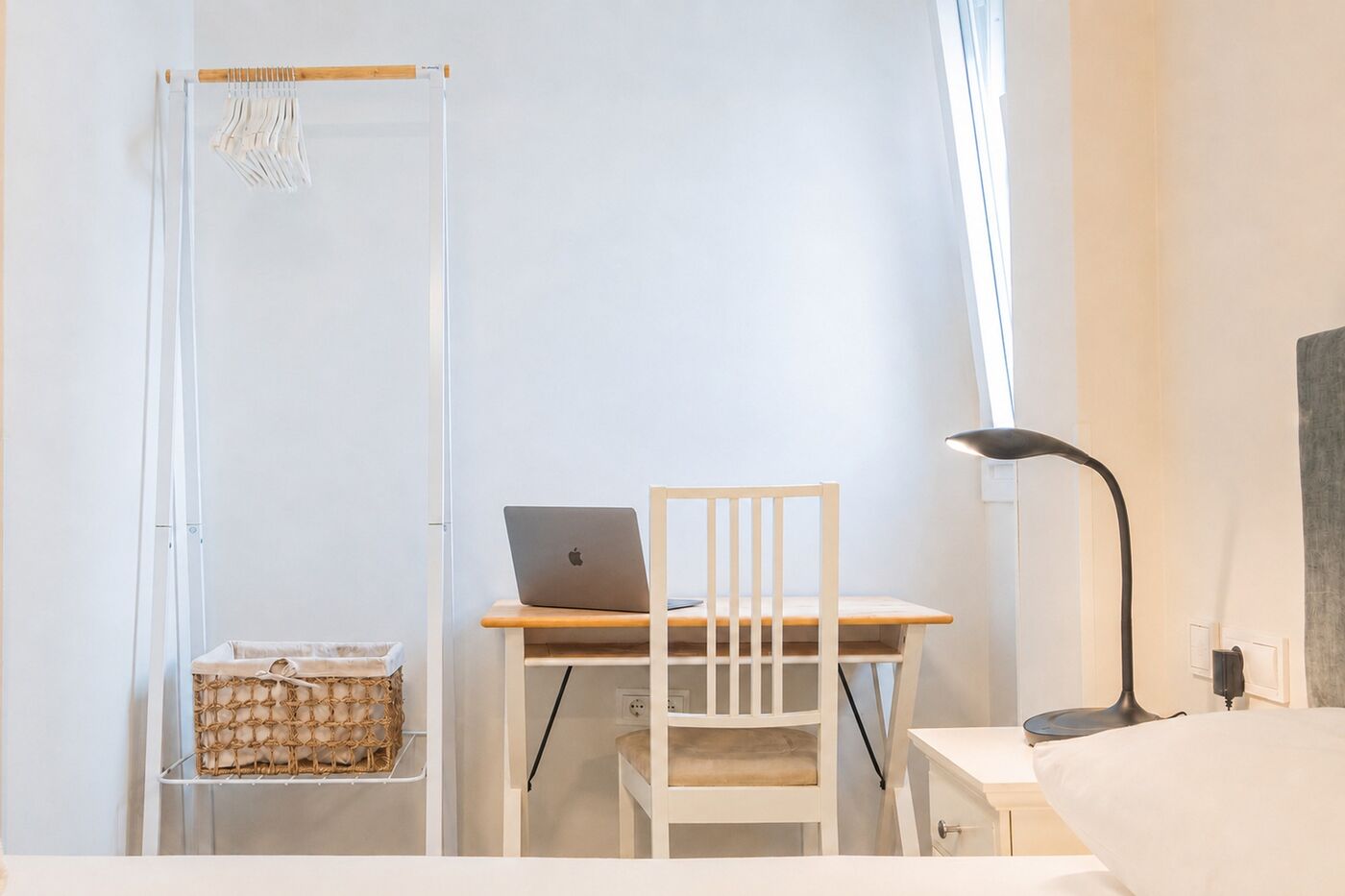
Work Remotely From Marbella This Winter: The Complete Guide
A practical guide to a winter workation in Marbella: climate, daily rhythm, sharing a four-bedroom base, transport and the checks to make before booking.
Read article